- HOME
- Data Collection Insights
- Why business process automation (BPA) is the strategy for 2026
Why business process automation (BPA) is the strategy for 2026
- Last Updated : May 7, 2026
- 245 Views
- 3 Min Read
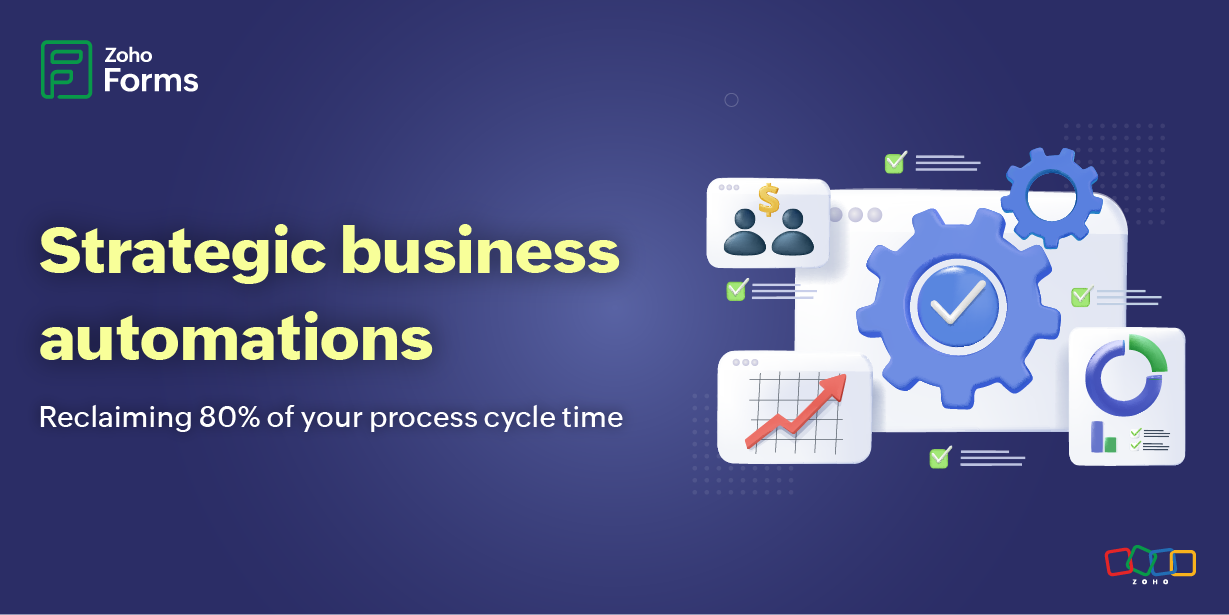
In today’s hyper-competitive market, the question is no longer whether you should automate, but how deeply you can weave automation into your organizational DNA. Business process automation (BPA) has evolved from a luxury for tech giants to a survival requirement for businesses of all sizes.
By 2026, Gartner's Strategic Technology Trends report reveals that 30% of large enterprises have listed hyper-automation as a top strategic priority. This shift goes beyond just cutting costs, and ventures into agility and accuracy, and involves a shift from manual data entry to mindful strategy.
Workflow mapping: A blueprint of efficiency
Workflow mapping is the process of visually documenting every step of a business task. It acts as a blueprint that identifies the actual potential (and hidden bottlenecks) of your current operations.
Processes often grow organically, leading to redundant steps and silos. However, the impact of cleaning these up is measurable: McKinsey & Co's research on automation trends suggests that companies investing in process analysis see immediate labor cost reductions of up to 40%. By mapping your flow, you ensure that logic-based rules take over the draining tasks of manual data shuffling.
Killing the approval lag with Zoho Forms
The approval lag is the silent killer of productivity. For an Operations Manager or HR Director, waiting for manual emails is no longer viable. According to Kissflow's 2026 BPA findings, organizations implementing automation see an average cost reduction of up to 50% and an immediate 65-70% decrease in process cycle times. For mid-sized companies, these manual inefficiencies don't just waste time, they represent approximately $150,000 annually in lost productivity and avoidable operational overhead.
Zoho Forms facilitates business process automation by digitizing data collection and triggering instant, automated workflows. It eliminates manual entry and streamlines tasks such as:
- Multi-step approval workflows: Create complex chains for expense reports or leave applications where submitted data triggers instant alerts for specific reviewers.
- Real-time notifications: Set up immediate email or SMS alerts to notify team members the second a form is submitted, drastically improving response times.
- Accountability and audit trails: 94% of enterprise professionals prefer a unified platform because it provides a clear audit trail. You no longer ask "Who made the change?" because the system tells you exactly who accessed and modified data, where and when.
The no-code revolution: Democratizing innovation
The most significant shift in 2026 is the rise of the Business Technologists—essentially, non-IT employees using no-code platforms to build their own solutions. Forrester's Low-Code/No-Code Adoption Report forecasts this market will exceed $30 billion in 2026.
Zoho Forms empowers these "citizen developers" by offering powerful features without requiring a single line of code:
- Conditional logic and rules: Use smart rules to show/hide fields, assign tasks to specific team members based on user input, or customize notifications dynamically.
- Automatic document generation: Instantly populate templates with form data to create invoices, contracts, or offer letters.
- Signature and payment integration: Collect legally binding e-signatures and process payments immediately upon submission.
Scaling operations by creating a unified ecosystem
To eliminate the black hole of internal requests, data must move seamlessly between departments. While Zoho Forms handles the data collection, the integration layer allows you to manage that data expertly.
Salesforce's State of IT & Automation Report highlights that 78% of business leaders believe automation is now the primary driver of overall productivity. Zoho Forms achieves this through:
- Deep ecosystem integrations: Instantly transfer submission data to Zoho CRM, Zoho Books, or Zoho People.
- Bridging apps with Zoho Flow and Zapier: Connect your forms to third-party tools like Slack, or Asana to automate task assignments and team alerts across your entire tech stack.
Hard data: The ROI of automation (2025-2026)
| Metric | Impact of automation |
|---|---|
| Productivity | 78% increase in overall output per team member. |
| Human error | 50% reduction in errors compared to manual entry. |
| Processing time | 80% reduction in cycle times for approvals and invoices. |
| Employee satisfaction | 89% of employees feel more satisfied when tedious tasks are automated. |
Moving from manual to mindful
BPA isn't about replacing people; it’s about replacing the parts of people’s jobs that they hate. By using workflow mapping, setting up automated approvals, and embracing the no-code power of Zoho Forms, you free your team to do the "human" work: strategy, creativity, and relationship building.
The era of forms that work for you has begun.
 Arshiya N
Arshiya is product narrative expert at Zoho Forms who specializes in translating intricate technical logic into clear, strategic solutions. With a passion for impactful storytelling and a keen eye for detail, she bridges the gap between complex features and intuitive user experiences to help businesses streamline their data collection. Known for her precision, she is on a mission to turn technical workflows into human-centered narratives. Beyond the desk, Arshiya leans into the complex and the classic, whether challenging herself with meticulous Dutch Master-style paintings or capturing the world through her lens. A traveler and photographer at heart, she finds inspiration in the fine details, infusing her work with visual clarity and creative depth.